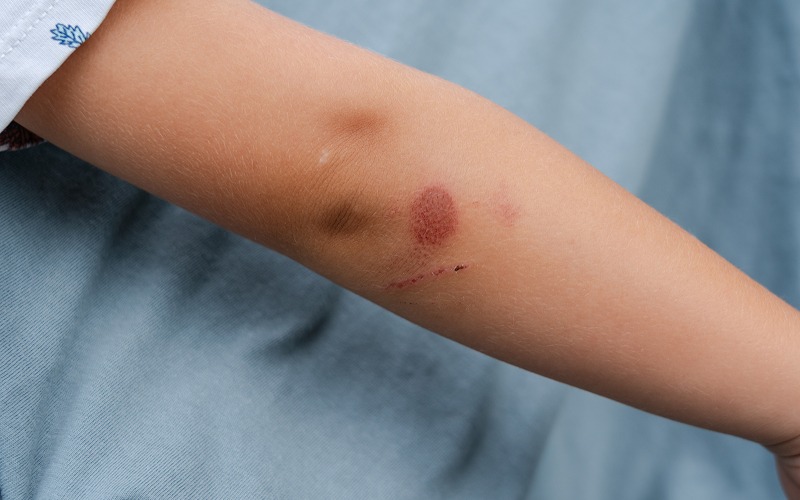
Waking up with itchy red marks can leave anyone wondering what caused them. Bed bugs, mosquitoes, fleas, ants and mites can all leave small, raised bumps, and reactions vary from person to person, so the bites alone rarely give a definite answer. Looking at the pattern, location and timing of the bites, along with signs around the home, gives a clearer picture. Telling these bites apart early can help a household decide whether bed bug treatment is needed or whether another insect is more likely to blame.
Signs That Point to Bed Bugs
Bed bugs feed at night while people sleep, usually on skin left exposed by bedding or sleepwear. Their bites often share several features, including these:
- Small, red, raised welts, sometimes with a darker spot in the centre.
- Bites arranged in a line or cluster of three to five, sometimes called “breakfast, lunch and dinner”.
- Marks on the face, neck, arms, shoulders and hands rather than the lower legs.
- New bites that appear overnight and continue for several nights in a row.
- Tiny blood spots on sheets or pillowcases, or a faint musty smell around the bed.
Some people show no reaction at all, while others may not notice itching until a day or more after being bitten.
Signs That Point to Other Insects
Other common insects leave bites with their own tell-tale features.
Mosquitoes
Mosquito bites are usually single, puffy and randomly scattered rather than grouped in lines. They often appear soon after being bitten and itch almost immediately. Some mosquitoes, such as Aedes, bite mainly during the day, while others are more active at night.
Fleas
Flea bites tend to be very small, intensely itchy and concentrated around the ankles, lower legs and waistline. Homes with cats or dogs are more likely to have fleas. That said, in households weighing up whether to call a pest control company in Singapore, checking pets for scratching and flea dirt in their fur is a useful first step before assuming bed bugs are the cause.
Ants
Some ants, such as fire ants, bite and sting at the same time, causing a burning sensation followed by small pus-filled bumps. These bites usually happen during the day while sitting or standing near an ant trail. Several bites may appear within seconds, as one ant can sting repeatedly.
Mites
Bird mites, rodent mites and dust-related mites can cause tiny, itchy red spots, often in areas covered by clothing. Bites may appear in clusters but lack the neat lines associated with bed bugs. Mite bites often continue even after bedding is washed, especially if birds nest near windows or rodents are present.
Bite Patterns at a Glance
The table below summarises the main differences, though individual reactions can blur these patterns.
| Insect | Typical Pattern | Common Body Areas | When Bites Usually Occur |
| Bed bugs | Lines or clusters of 3 to 5 | Face, neck, arms, shoulders | Overnight while sleeping |
| Mosquitoes | Single, scattered, puffy | Any exposed skin | Day or night, depending on species |
| Fleas | Small groups, very itchy | Ankles, lower legs, waist | Any time, often near pets |
| Fire ants | Clusters with pus-filled bumps | Feet, legs, hands | Daytime near ant trails |
| Mites | Scattered or clustered spots | Areas under clothing | Any time, often near nests or birds |
Clues Beyond the Skin
Since bites alone can be misleading, checking the surroundings often settles the question. Live bed bugs, shed skins, eggs and dark spots along mattress seams point clearly to bed bugs, while pet scratching suggests fleas and visible ant trails point to ants. Keeping a short record of when and where new bites appear can also help narrow down the source over several days. Anyone with severe swelling, blistering or signs of infection may wish to see a doctor for proper assessment.
Contact Rentokil to confirm whether bed bugs are present in your home.
About the Author